Showing posts with label food. Show all posts
Dec 1, 2011
Baek Kimchi (White Cabbage Kimchi)
Paek kimchi originaly came from North Korea where less salt and red pepper are used in cooking. (Cabbages are soaked in brine until they have softened and are seasoned using ginger, garlic strips, and red pepper threads instead of red pepper powder. The materials used for stuffing vary according to personal taste. It can combine radishes, mushrooms, Korean pears, chestnuts, and dates with watercress greens and mustard leaves, and even little bit of pepper powder.)
source and photos: lifeinkorea
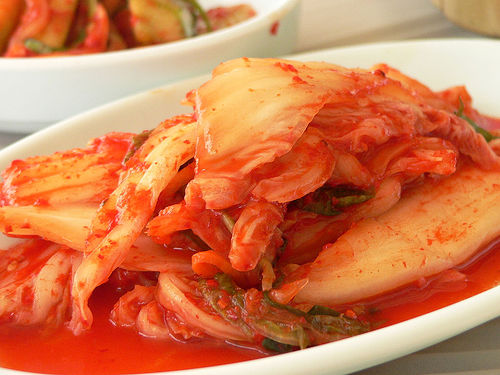
Baechu Kimchi : (Whole Cabbage Kimchi)
This is the most common, classic kimchi you will find at a Korean meal. Whole heads of cabbage are trimmed to remove discolored outer leaves and then split longways into two or four sections. These sections are soaked in brine for three or four hours until they have softened (during the summer and winter for about 12 hours.)
While this is going on, the other ingredients are assembled and mixed together. (Ground pepper powder, chopped garlic and ginger, pickled baby shrimp -or other sea food pickled such as anchovies and other fishes as a form of row fish cut in bitable size, sponge seaweed- and oysters can be added depending taste and family recipes.)
When they are mixed and the cabbage is ready. For common baech'u kimchi the softened cabbages are cut in to bitable size and mix with other ingredients. For Tongbaechu kimchi, handfuls of the stuffing are then pushed and spread between the leaves of the cabbage until it is all used. The outer leaves of the cabbage are wrapped round whole to form a solid bundle, which is then stored in a crock covered with salted leaves and pressed down firmly.
Source: LifeinKorea
Photo: skimskim
Kimchi: Iconic
This side dish of fermented vegetables continues to be an essential part of any Korean meal. Early kimchi dishes were relatively mild, spiced with fermented anchovies, ginger, garlic, and green onions. Koreans still use these ingredients today, but the spice most closely associated with modern kimchi is red pepper powder.
Korea boasts more than two hundred types of kimchi, all rich in vitamins, minerals, and proteins created by the lactic acid fermentation of cabbage, radish, and other vegetables and seafood.
The kimchi served at a meal will vary according to region, season, and may differ according to the other dishes on the menu. A seaside region's kimchi will be saltier than that of a landlocked area, and summer cooks produce cooling water kimchis to contrast with the heartier cabbage kimchis of the autumn and winter. And a delicate cucumber kimchi sits better beside a bland noodle dish than beside a robust beef stew.
To understand kimchi at its simplest, think of it is as divided into two kinds: seasonal kimchi (for short-term storage, made from vegetables that are fresh in the markets at any given time) and Kimjang kimchi (for long-term storage, made in quantity in late autumn).
Subscribe to:
Posts (Atom)